
Best Yoga Studio Software and Apps in 2026
A practical comparison of five booking systems for yoga teachers and studios, with current prices, features and the catches to check.
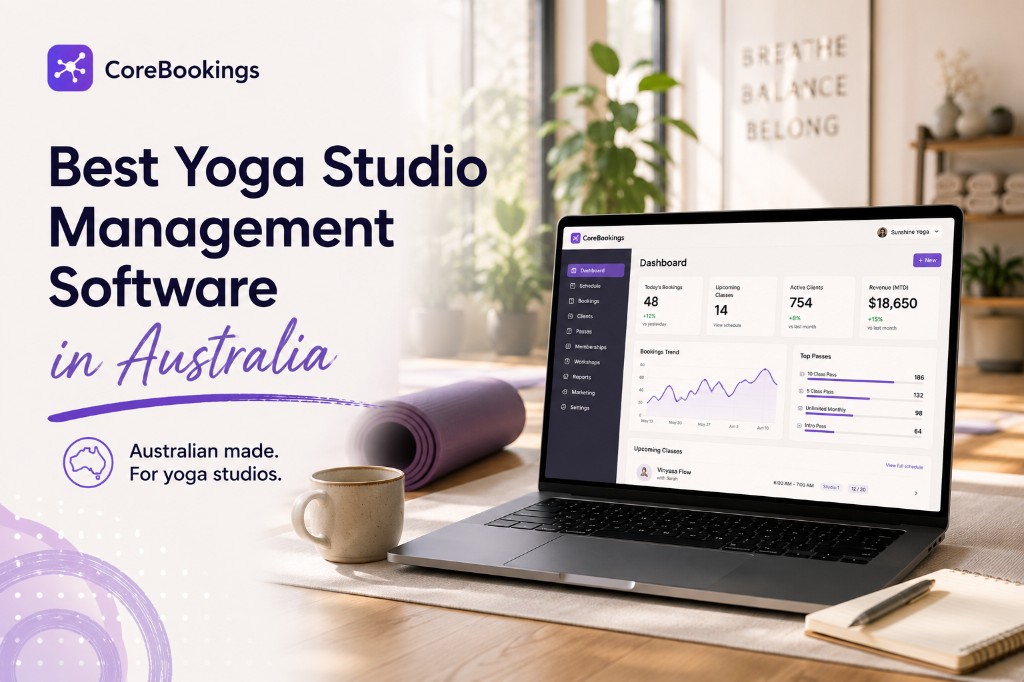
When I first wrote this guide, I mixed yoga practice apps with yoga studio software. They solve two very different problems. A practice app teaches poses or plays a class. Studio software runs the business behind your classes: the timetable, bookings, payments, passes, memberships, waitlists and reports.
If you are a yoga teacher or studio owner, the best app is not the one with the longest feature list. It is the one your clients can use without asking for help, and the one that saves you from checking bank transfers and spreadsheets after class.
My short answer: CoreBookings is my pick for small and medium Australian studios that want local support and sensible studio tools. Acuity is useful when appointments are more important than classes. Mindbody suits larger businesses that want marketplace reach. Punchpass is a strong option for independent studios, while Momoyoga gives new teachers a low-cost way to start.
Prices and features below were checked on 22 July 2026. Vendors can change them, and card fees, SMS, GST, foreign exchange and add-ons may cost extra.
Compare yoga studio software in 2026
| Software | Advertised starting price | Best for | Useful number |
|---|---|---|---|
| CoreBookings | A$59 per month + GST | Australian yoga, Pilates and dance studios | 3 monthly plans: A$59, A$99 and A$149 |
| Acuity Scheduling | US$20 monthly, or US$16 on annual billing | Solo teachers and appointment-led businesses | 1, 6 or 36 calendars by plan |
| Mindbody | A$89 per location per month | Growing and multi-location studios | Access to 3M+ monthly shoppers, according to Mindbody |
| Punchpass | US$59 per month | Independent class-based studios | Unlimited classes, passes and instructors on all plans |
| Momoyoga | Free, or €29 per month billed annually | New and budget-conscious yoga teachers | The free plan adds a 5% platform fee to online payments |
What should a yoga studio app do?
A yoga studio does not work like a hairdresser or a general appointment business. One 6:00 pm class may have 20 clients, a waitlist, three pass types and a cancellation window. Your software needs to understand that.
- Make booking easy on a phone. A client should be able to find a class, buy the correct pass and book without calling you.
- Handle more than drop-ins. Look for intro offers, 5 or 10-class passes, recurring memberships, workshops, courses and private sessions.
- Manage capacity. Waitlists, late cancellation rules and attendance records help you fill places without overbooking the room.
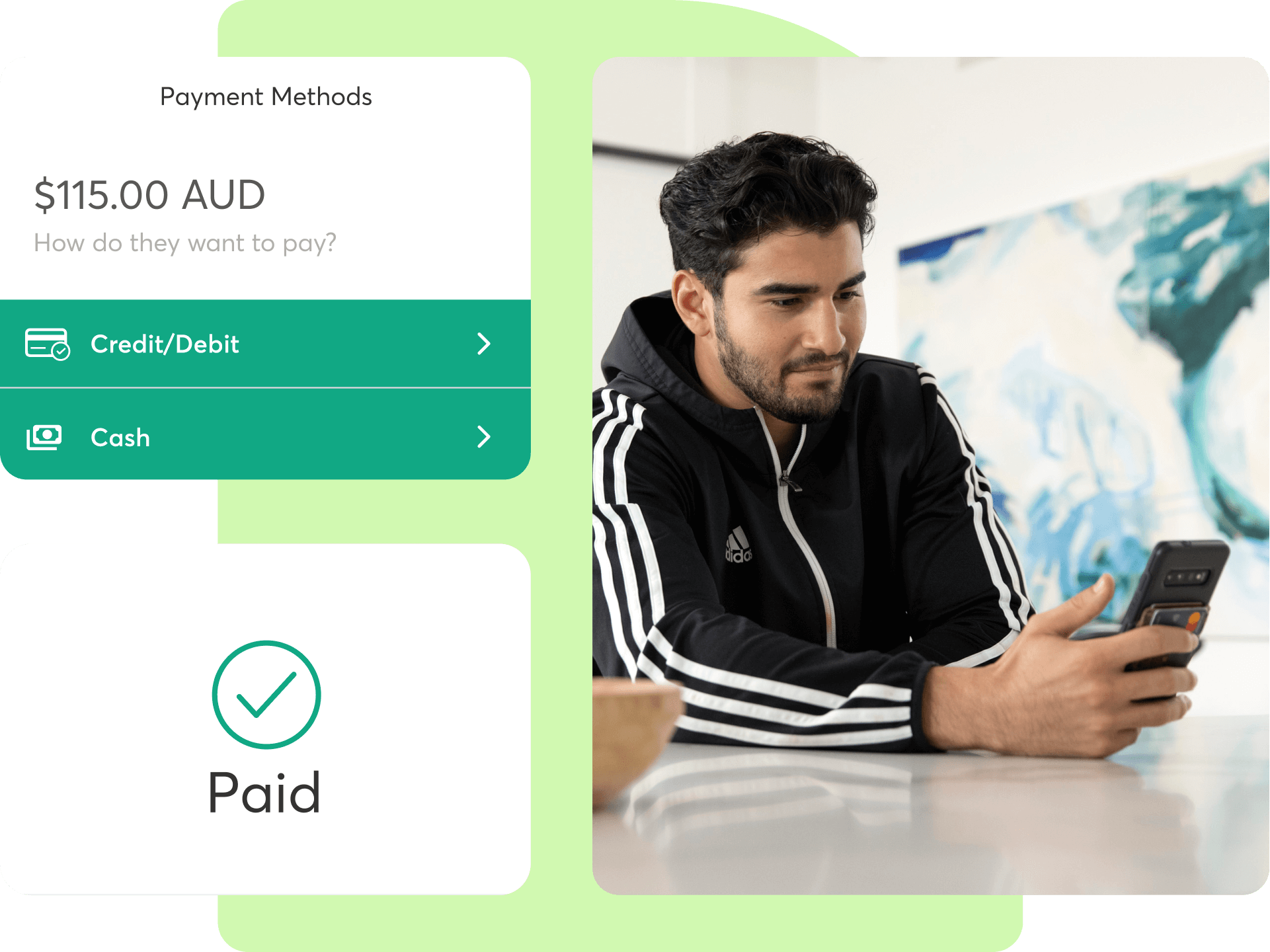
- Take payment before class. Upfront and recurring payments reduce unpaid visits and improve cash flow.
- Give you useful reports. At minimum, you should be able to see sales, attendance, unpaid visits and expiring passes.
- Let you leave. Ask how to export clients, passes, bookings and transaction records before you sign a contract.
Do not compare the subscription price alone. A difference of A$30 a month becomes A$360 a year, but one extra fee on every payment can cost more than that. Work out your likely cost using your own monthly sales, number of locations, SMS use and required add-ons.
1. CoreBookings: best for Australian yoga studios
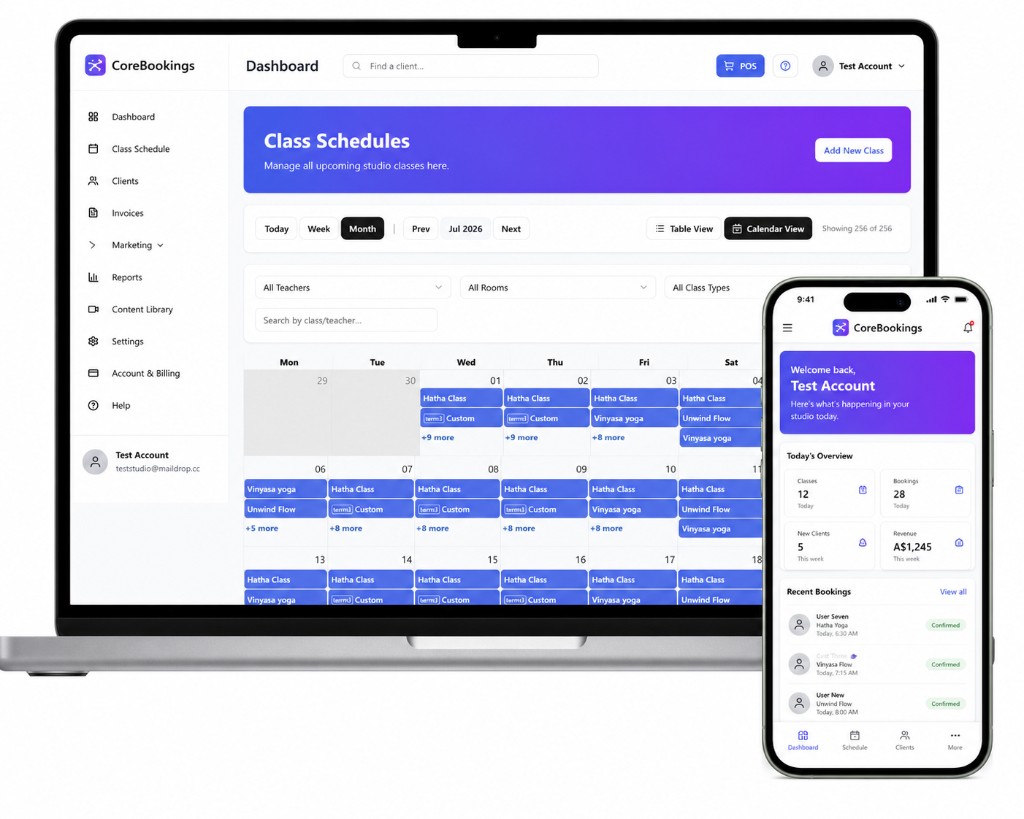
CoreBookings, formerly KRIYA, is built in Sydney for independent yoga, Pilates, dance and fitness businesses. It covers class timetables, courses, workshops, passes, memberships, Stripe payments, attendance, automated emails and reporting.
The public pricing page lists three plans at A$59, A$99 and A$149 per month + GST. That gives an Australian studio a clear local price instead of a USD bill that moves with the exchange rate. All three are monthly plans, but you should check the current inclusions on the pricing page.
Where CoreBookings is strong
- Designed around classes, passes, terms, workshops and memberships
- Free client app for iOS and Android
- Australian product, pricing and local support
- Stripe payments and recurring billing
- No enterprise-sized system to learn before you can publish a timetable
What to check
CoreBookings is more focused than an enterprise platform. If you need a large consumer marketplace, complex franchise controls or dozens of third-party integrations, compare it carefully with Mindbody. You can read real studio experiences in our customer stories.
Start a free trial, book a demo, or see how the CoreBookings mobile app works for clients.
2. Acuity Scheduling: best for appointments and private sessions
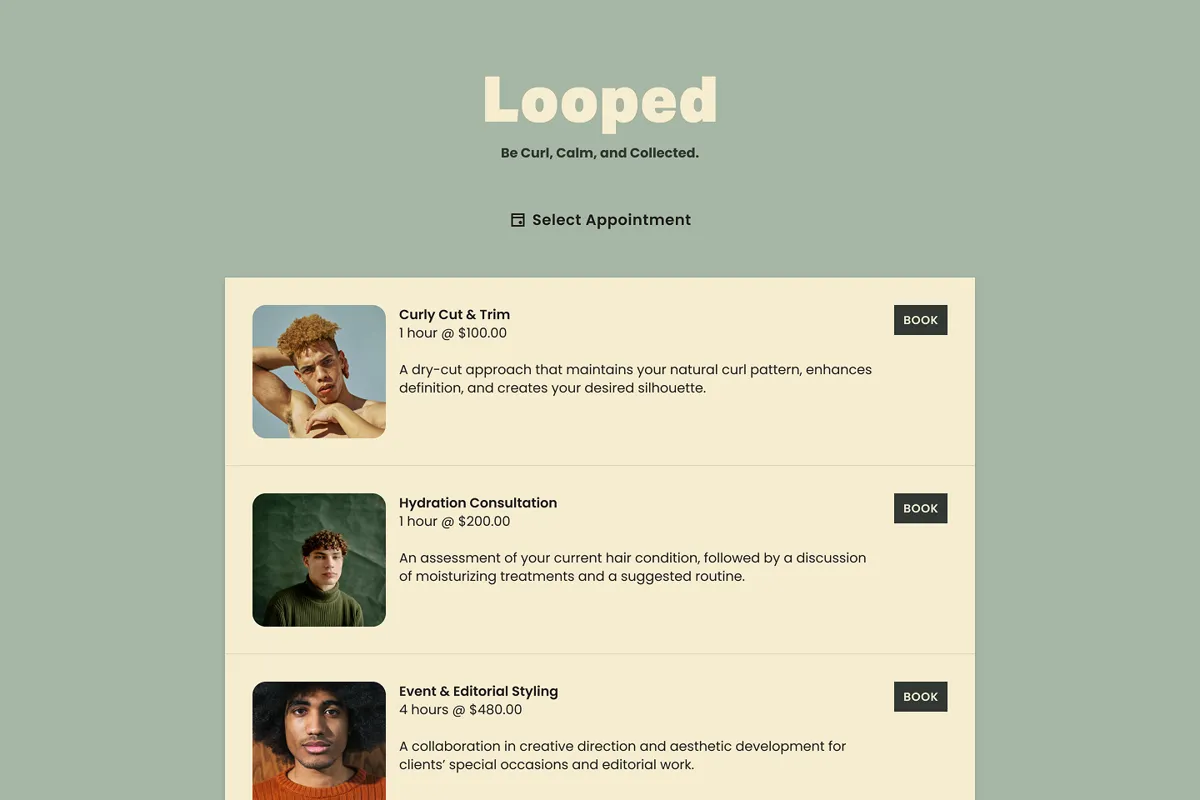
Acuity is a Squarespace scheduling product. It can run group classes, but its main strength is appointment scheduling. That makes it a practical choice for a solo yoga therapist, private teacher or wellness business that combines yoga with consultations.
As of July 2026, Acuity lists Starter at US$20 per month, Standard at US$34 and Premium at US$61 when paid monthly. Annual billing reduces those advertised monthly equivalents to US$16, US$27 and US$49. The plans include 1, 6 and 36 calendars respectively, with a 7-day free trial.
Where Acuity is strong
- Stripe, Square and PayPal payment integrations
- Client forms, automatic time-zone conversion and email reminders
- Packages, memberships, gift certificates and SMS reminders on Standard and above
- Useful for businesses with many appointment types or staff calendars
What to check
Acuity can accept group bookings, but it is not built first as a yoga studio system. Test class passes, waitlists, check-in and recurring memberships against your real timetable. Prices are in USD and taxes are extra. Review the official Acuity plans before choosing.
3. Mindbody: best for marketplace reach and larger studios
Mindbody combines studio management with a large consumer marketplace. Its Australian pricing page says the Mindbody app reaches 3M+ monthly shoppers, and the company says it is trusted by 40,000+ businesses. Those are vendor figures, but they show why a studio may choose Mindbody for discovery as well as administration.
The Australian plans currently start at A$89 per location per month for Go, then A$279 for Core and A$369 for Growth. Go includes bookings, payments, website widgets, app listing and basic reporting. Core adds resource management and stronger reporting. Growth adds email and SMS campaigns, lead management and a 24/7 AI front desk.
Where Mindbody is strong
- Consumer marketplace and app listing
- Unlimited users per location
- Point of sale, inventory, reporting and multi-location options
- 60+ third-party integrations advertised by Mindbody
What to check
The monthly plan is only part of the cost. Mindbody notes that add-ons and transaction-related fees can apply, while a branded mobile app is not included in Go. Ask for a written total based on your locations, payments, marketing, SMS and app requirements. See the official Australian pricing.
4. Punchpass: best for independent class-based studios
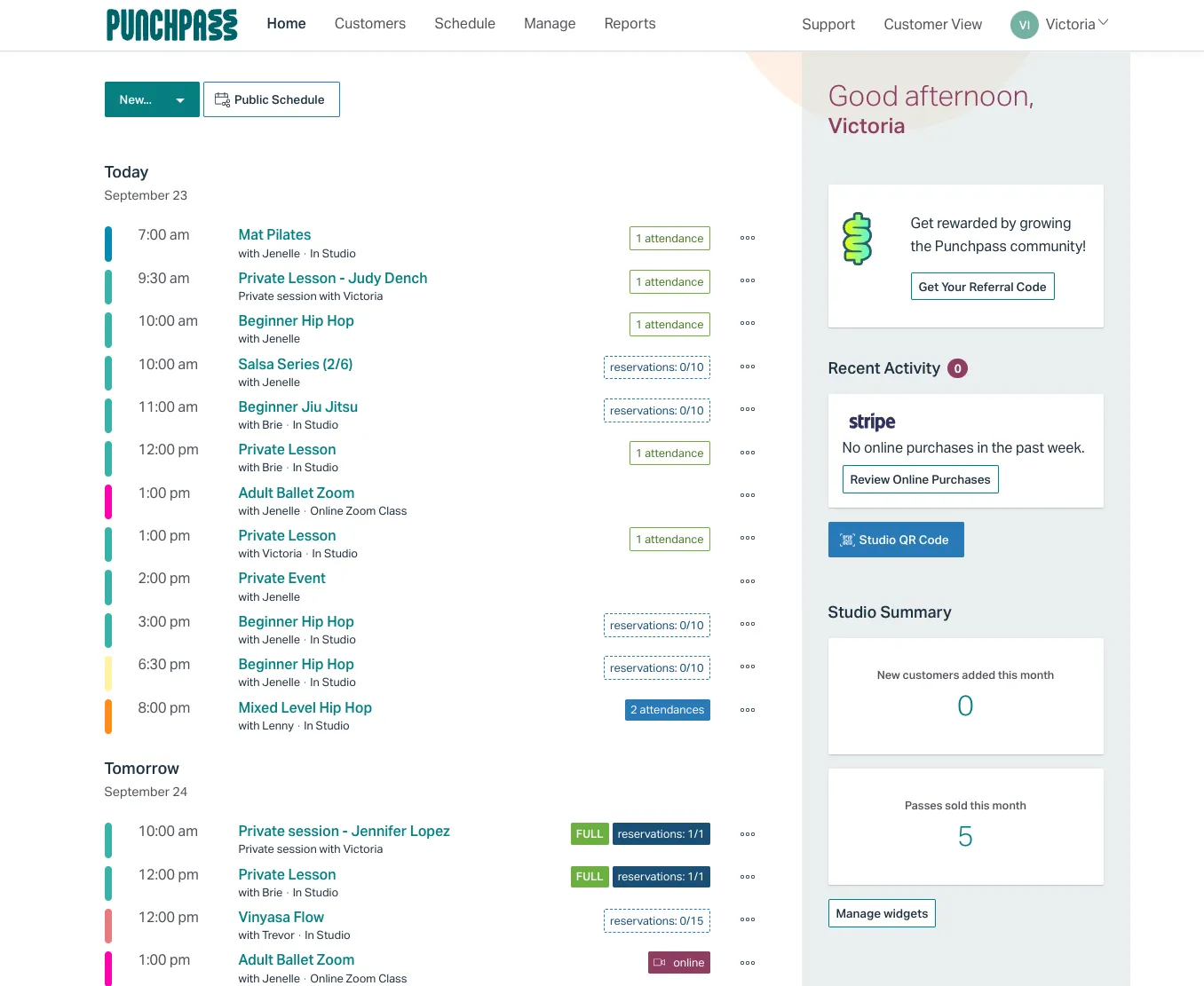
Punchpass is made for yoga, fitness and dance studios that want class management without a large enterprise setup. Its three monthly plans are US$59, US$99 and US$149, with a 12% discount shown for annual billing and a 14-day free trial.
Grow includes unlimited classes, passes and instructors, online sales, private sessions, reminders, waitlists, waivers, three automations and 10,000 minutes of video storage. Flow adds recurring memberships, family accounts and 20,000 video minutes. Pro increases storage to 30,000 minutes and allows unlimited automations.
Where Punchpass is strong
- Clear public pricing and month-to-month plans
- Unlimited classes, passes and instructors
- Waitlists, waivers, Zoom classes and recorded content
- Free customer-list migration advertised by Punchpass
What to check
Pricing is in USD and Stripe fees are separate. Punchpass has an iPhone app, while its pricing page says Android clients can install the service as a progressive web app. Confirm whether that experience is right for your clients. Compare the current Punchpass plans.
5. Momoyoga: best low-cost start for yoga teachers
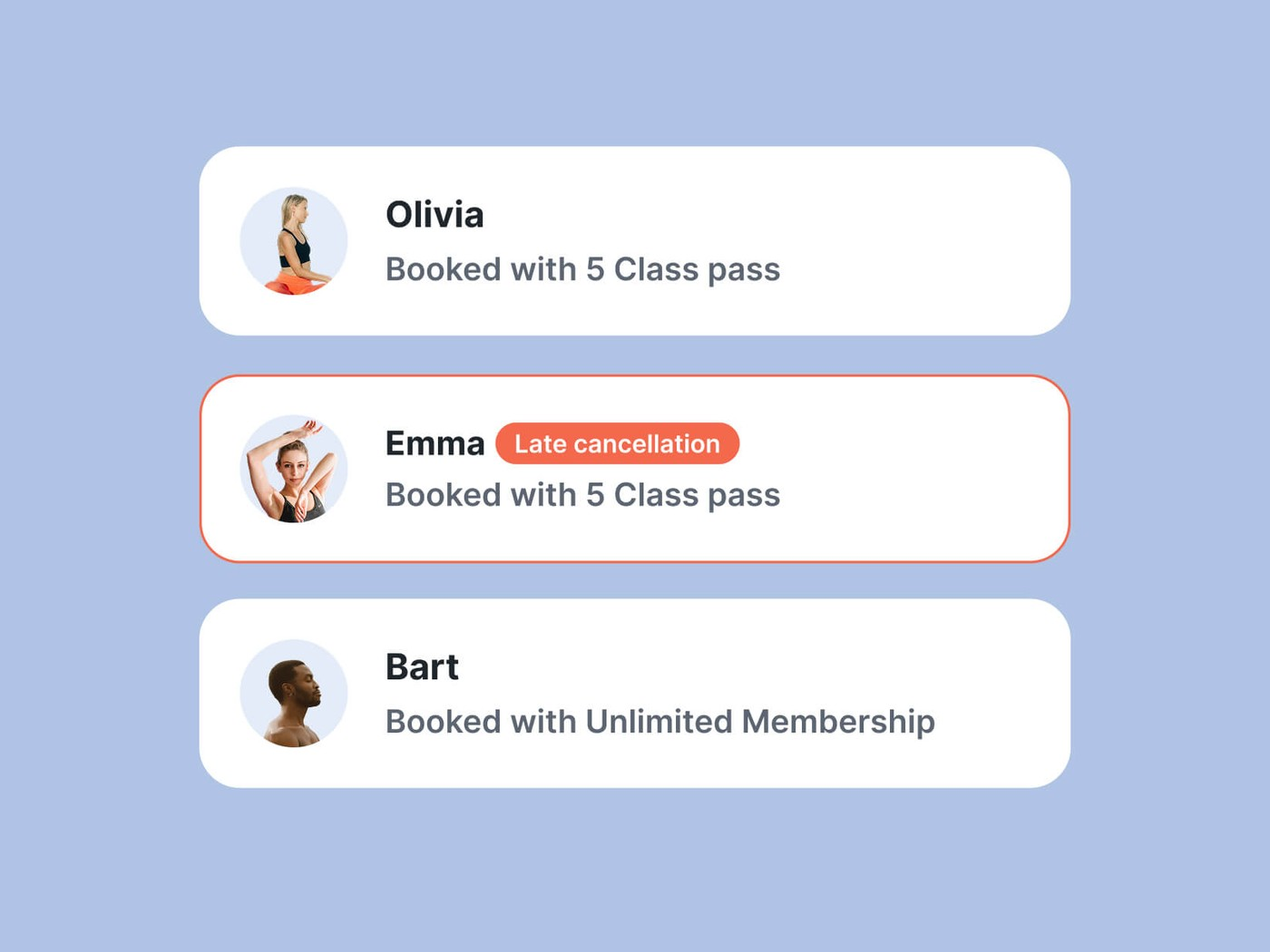
Momoyoga focuses specifically on yoga teachers and studios. Its free plan includes classes, events, payments, online teaching, video on demand and a client app. That sounds generous, but online payments on the free plan carry a 5% Momoyoga platform fee on top of the payment provider's transaction fee.
Paid annual pricing starts at €29 per month for Standard and €59 for Plus. Standard adds unlimited memberships and passes, waitlists and export tools. Plus adds recurring memberships, promo codes, branding, customised emails and Mailchimp. Both paid plans include a 14-day trial.
Where Momoyoga is strong
- A usable free entry point for a new teacher
- Yoga-specific language and workflows
- Client app, online classes and video content
- No extra fee for the number of classes, yogis or memberships on paid plans
What to check
The free plan can become expensive as online sales grow. For example, a 5% platform fee on €2,000 of monthly online payments is €100, before the payment processor fee. At that point a paid plan may cost less. Pricing is in euros, so Australian studios should also allow for exchange rates. Check the official Momoyoga pricing.
Which yoga studio app is best for your business?
- New solo teacher: Start with Momoyoga Free if sales are low, or compare Acuity if private sessions are your main service.
- Independent Australian studio: CoreBookings gives you local pricing, support and class-based tools without an enterprise setup.
- Independent studio with video content: Punchpass includes substantial video storage and Zoom support.
- Appointment-led wellness business: Acuity is strong when separate calendars, forms and time zones matter more than studio check-in.
- Large or multi-location operation: Mindbody offers deeper reporting, marketing and marketplace reach, but ask for the full cost first.
If you want a longer Australian comparison, read my guide to the best yoga studio management software in Australia. New teachers may also find the booking system setup guide helpful.
A simple 7-day test before you decide
Do not spend the whole trial changing colours and uploading logos. Test the parts that affect money and client experience.
- Create one drop-in, one 10-class pass and one recurring membership.
- Publish a class with a capacity of 10 and add yourself to the waitlist as the 11th client.
- Buy a pass and book from your phone without using the admin login.
- Cancel inside and outside the cancellation window.
- Record one no-show and one unpaid visit.
- Ask another teacher to mark attendance and run a class report.
- Export your client, sales and attendance data.
Time each task. If a common booking takes you 4 minutes during the trial, it will still take about 4 minutes when the reception desk is busy. A simple system that staff understand is often more valuable than 100 features they avoid using.
Frequently asked questions
What is the best yoga studio software for a small Australian studio?
CoreBookings is my pick for a small or medium Australian yoga studio that wants class scheduling, passes, memberships, Stripe payments, reporting and local support in one system. Compare the workflow and total cost with at least one alternative before moving your data.
How much does yoga studio software cost?
The five products in this guide start from free to A$89, US$59 or EUR29 per month, depending on the product, currency and billing term. Payment processing, SMS, add-ons, tax and data migration can change the final cost.
Do I need a mobile app for my yoga studio?
A mobile app is useful when clients book often, buy passes on their phones and need quick access to their upcoming classes. A good mobile website can still be enough for a new teacher with a simple timetable.
Can yoga studio software manage memberships and class passes?
Yes. Most specialist platforms support drop-ins, class packs and recurring memberships. Check the exact plan because some products reserve recurring billing, family accounts or advanced automation for higher tiers.
What should I test before changing booking systems?
Test the complete client journey: create an account, buy a pass, book a class, join a waitlist, cancel, receive a reminder and check in. Also export a client and sales report so you know that your business data is accessible.
My recommendation
For a small or medium Australian yoga studio, I would start with CoreBookings. It is designed for the way local studios sell classes, passes, memberships, courses and workshops, and the A$59 starting price is easy to understand. Local support also matters when a payment or booking problem appears five minutes before class.
That does not make it the answer for every business. Choose Acuity for appointment-heavy work, Mindbody for scale and marketplace discovery, Punchpass for a strong independent-studio toolkit, or Momoyoga when you need the lowest possible starting cost.
Take two realistic trials and run the same 7-day test in both. Then compare the complete yearly cost, not only the price in the headline. If you want to see CoreBookings with your own timetable and pass types, book a demo or start a free trial.