
Best Yoga Studio Management Software in Australia (2026 Guide)
Compare eleven platforms for Australian yoga studios, with current prices, trials, local support and the hidden costs to check before you switch.
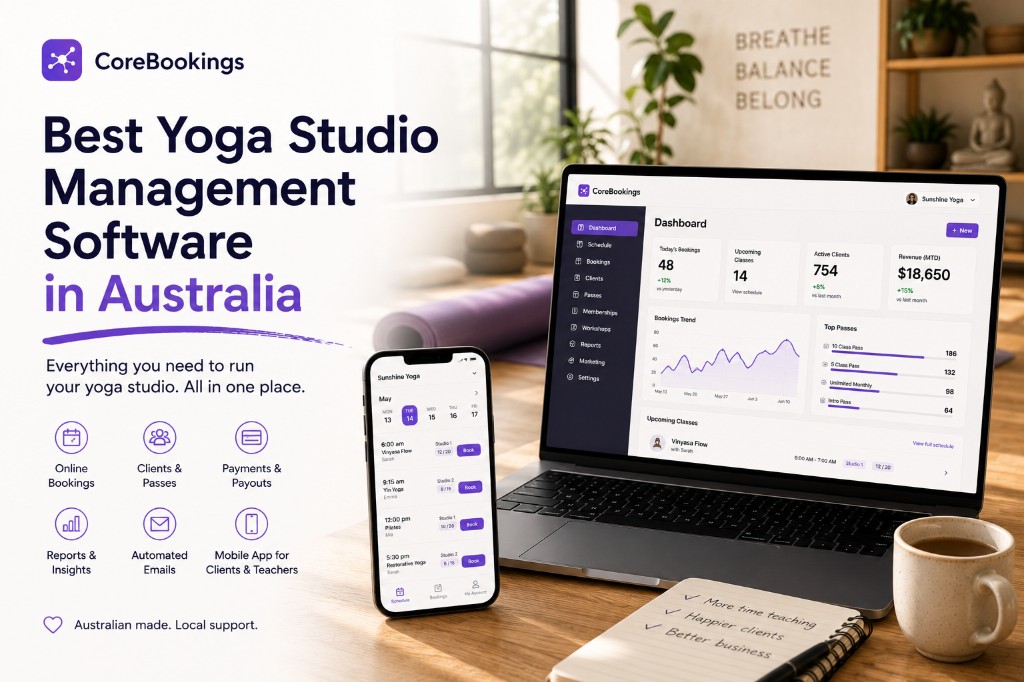
When I first compared yoga studio software in Australia, most lists treated every booking system as if it did the same job. They do not. A platform made for private appointments behaves differently from one built around a 20-person class, a waitlist, 10-class passes and recurring memberships.
Australian studios also have questions that global comparisons often miss. Is the price in AUD? Is GST included? Can you get help during Australian business hours? What happens to card fees, SMS costs and client data if you leave?
My short answer: CoreBookings is my first choice for most independent Australian yoga studios. Bookamat is worth testing for a small studio that wants pay-as-you-grow pricing. Clovo suits studios that prefer no monthly fee and a capped percentage of sales. Clubworx is a solid Australian option when memberships and retention tools matter as much as class bookings. Mindbody suits larger businesses that value its marketplace and deeper operations — but it is expensive once you leave the A$89 entry plan and add real studio features. Acuity is better for private sessions than a busy class timetable.
For a shorter comparison of global apps, see my guide to the best yoga studio software and apps. This article goes further into the Australian market and includes platforms that are not yoga-first.
Prices and features were checked on 22 July 2026. Vendors can change them. Card processing, SMS, GST, foreign exchange, add-ons and migration may cost extra.
Compare yoga studio management software in Australia
| Software | Advertised starting price | Trial or free entry | Australian angle | Best for |
|---|---|---|---|---|
| CoreBookings | A$59 per month + GST | Free trial available | Sydney-built, AUD pricing and local support | Independent Australian studios |
| Bookamat | Free for up to 10 active clients; paid local pricing | 14 days, no card | Local currency, Stripe and Square support | Teachers and growing studios |
| Nabooki | A$45 monthly or A$37.50 on annual billing, excluding GST | 30 days, no card | Australian support, but now tourism-focused | Tours and activities, not a yoga-first pick |
| Mindbody | From A$89/location; Core A$279 and Growth A$369. Busy studios often pay far more with add-ons and marketplace fees | Demo-led | AUD per-location pricing; confirm total quote | Large and multi-location studios |
| Punchpass | US$59 per month | 14 days, no card | USD billing; no Australian-specific support | Independent class-based studios |
| Momence | Realistically from about US$199 per month; add-ons often push totals over US$300 | Free signup available | USD billing; confirm AUD total with fees and add-ons | Hybrid and content-heavy studios |
| WellnessLiving | $69 per month; confirm currency for Australia | Demo-led | Global product; request full Australian quote | Studios wanting marketing and CRM |
| Acuity | US$20 monthly or US$16 on annual billing | 7 days, no card | USD billing; appointment-first | Private teachers and yoga therapists |
| StudioBookings | $25 per month; official page does not label currency | 14 days, no card | Global product; confirm currency and tax | Budget-conscious class studios |
| Clovo | No monthly fee; 1% of Clovo sales, capped at A$1,100 + GST a year | Free setup, no card | Australian-built, AUD, Sydney-hosted | Boutique studios that want pay-when-you-earn pricing |
| Clubworx | Free for up to 20 members; then A$109–A$169 per month | 15-day premium trial, no card | AUD pricing; Australian fitness software | Membership-heavy yoga, Pilates and boutique gyms |
What Australian studio owners should check
- The total cost in AUD. Convert foreign subscriptions and include GST, card processing, SMS, marketplace commissions, branded apps and required add-ons.
- Classes, not only appointments. Test capacity, waitlists, attendance, late cancellations, intro offers, class packs, terms, workshops and retreats.
- The client journey on a phone. Your client should be able to buy the right pass and book without asking which button to press.
- Support in your working hours. Send a real question during the trial. A help centre is not the same as a useful answer when payments fail before a 6:00 pm class.
- Australian payments and reports. Check your payment processor, payout timing, GST-ready transaction exports and reconciliation workflow.
- A safe way out. Export clients, attendance, passes, memberships and sales before signing a contract. Ask who migrates active memberships.
A small percentage fee can matter more than the headline subscription. An extra 2% on A$10,000 of monthly online sales is A$200 a month, or A$2,400 a year. Use your own numbers before deciding that a free or cheap plan costs less.
If you are opening your first studio, start with the practical steps in my booking system guide for new yoga teachers. It is also worth planning your class timetable before a demo, so every vendor sees the same real requirements.
1. CoreBookings: best overall for independent Australian studios
CoreBookings, formerly KRIYA, is built in Sydney for yoga, Pilates, dance and boutique fitness businesses. It manages classes, terms, courses, workshops, passes, memberships, Stripe payments, attendance, automated emails and reports.
The public pricing page lists three monthly plans at A$59, A$99 and A$149 + GST. Local pricing makes budgeting easier, and Australian support is useful when your business hours do not match a US help desk.
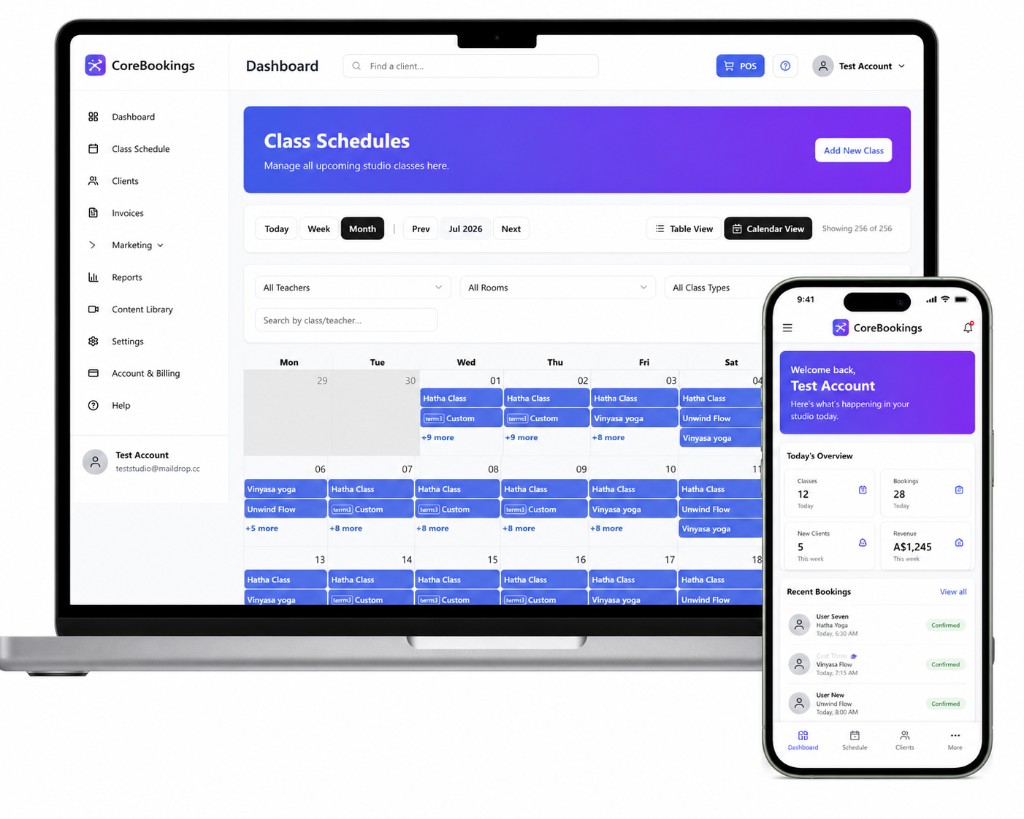
Where CoreBookings is strong
- Australian product, AUD pricing and local support
- Class passes, memberships, courses, workshops and terms
- Free client app for iOS and Android
- Stripe payments, attendance and studio reporting
What to check
CoreBookings is intentionally more focused than enterprise gym software. Compare carefully if you need a large public marketplace, franchise controls or a very broad integration catalogue. Read the customer stories, see the mobile app, or review current CoreBookings pricing.
2. Bookamat: best pay-as-you-grow option
Bookamat is designed for yoga, Pilates and fitness studios. It includes scheduling, payments, recurring memberships, packs, waitlists, reports, Zoom classes, multi-location support and a member app.
Studios with 10 or fewer active clients can use the full platform free. Bookamat then charges by plan and active client count, with prices shown in local currency. Its official site advertises a 14-day trial with no credit card and says more than 200 studios use the product.
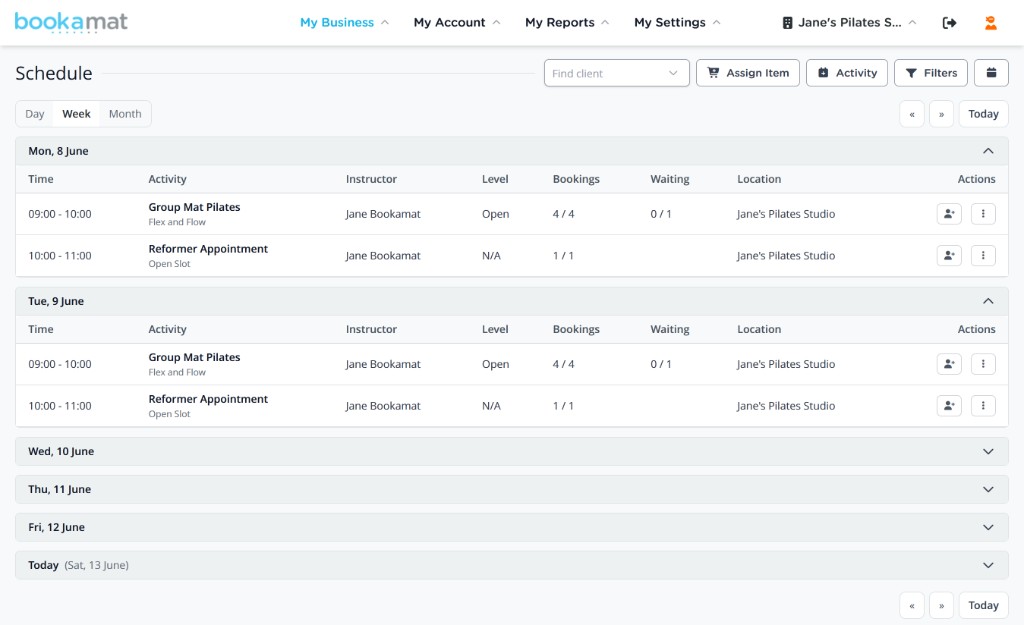
Where Bookamat is strong
- Free entry for a teacher with no more than 10 active clients
- All features and unlimited locations included on each paid plan
- Stripe, Square and Paystack support, subject to country availability
- Cost grows with active clients instead of the full database
What to check
Pay-as-you-grow pricing needs a calculation using your normal active-client count. Bookamat also mentions its own processing fee, which is reduced for studios with more than 100 active clients. Ask for the complete Australian cost, not only the subscription. See the official Bookamat pricing.
3. Nabooki: Australian software, but no longer yoga-first
Nabooki is Australian booking technology with local support and flat-fee plans. However, its current website is aimed at tour operators, attractions and government tourism programs. That is a major change from the way older yoga software lists described it.
The tours and activities page advertises A$45 monthly, or A$37.50 per month when billed annually, plus higher tiers. It offers a 30-day trial with no credit card and says direct bookings carry no platform commission. Payment processing still applies.
Where Nabooki is strong
- Australian support and AUD pricing
- Capacity, ticket types, direct bookings and automated confirmations
- Flat monthly fee rather than commission on direct bookings
What to check
I would not shortlist Nabooki for a normal yoga studio until it demonstrates memberships, class passes, recurring billing, waitlists and attendance using your timetable. Its current product direction is clearly tourism. Review the current Nabooki offer.
4. Mindbody: best for scale and marketplace discovery
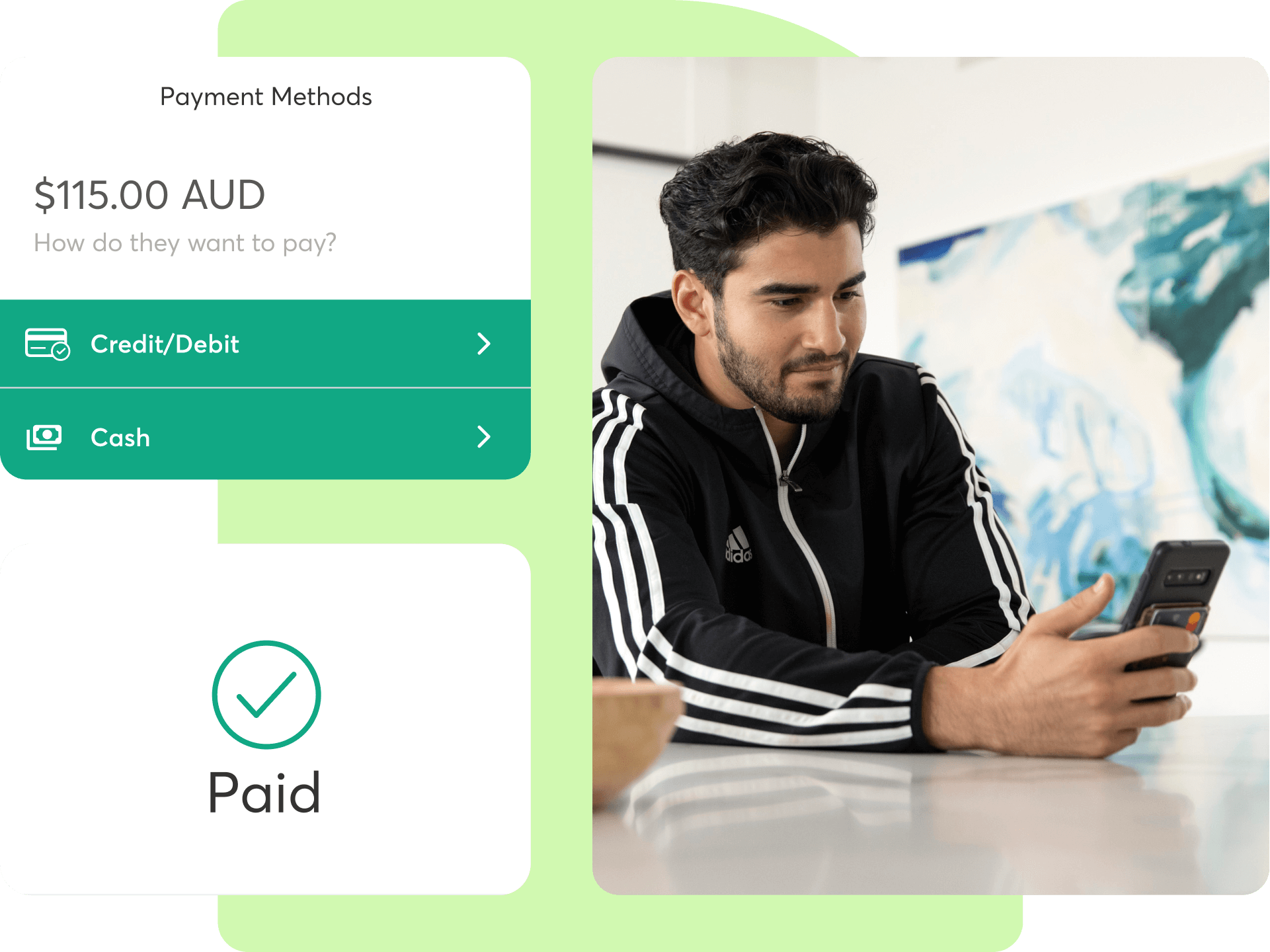
Mindbody combines business management with a consumer marketplace. Its Australian page says the app reaches 3M+ monthly shoppers and the platform is trusted by 40,000+ businesses. Those are Mindbody figures, but they explain its appeal to studios that want discovery as well as administration.
Australian plans are advertised at A$89 per location per month for Go, A$279 for Core and A$369 for Growth. Go covers booking, payments, website widgets, app listing and basic reporting. Core and Growth add resource management, stronger reporting, marketing automation and lead tools. Pricing is per location, so multi-site studios multiply that base quickly.
In practice, Mindbody is one of the more expensive options in this guide. Studio owners on Reddit and review forums regularly say the A$89 / US$99-style entry price is not what a busy class studio ends up paying. Many need Core or Growth features, then add a branded app, marketing tools, payment processing and Mindbody marketplace commissions on app-referred bookings. Long-time users also report steep year-to-year price increases, multi-month contracts and exit friction — including reports of a substantial data-export fee when leaving. Budget for the full stack, not only the published starting plan.
Where Mindbody is strong
- Large consumer marketplace and app listing
- Unlimited users per location
- Point of sale, inventory, reporting and multi-location tools
- 60+ integrations advertised by Mindbody
What to check
Get a written total that includes every location, the tier you actually need, branded app, SMS, payment processing and marketplace commission rates. Ask about contract length, renewal notice, early-exit costs and the fee to export clients and history if you leave. For many independent Australian studios, that all-in number is hard to justify unless marketplace discovery is a core growth channel. See Mindbody Australia pricing.
5. Punchpass: best for straightforward class management
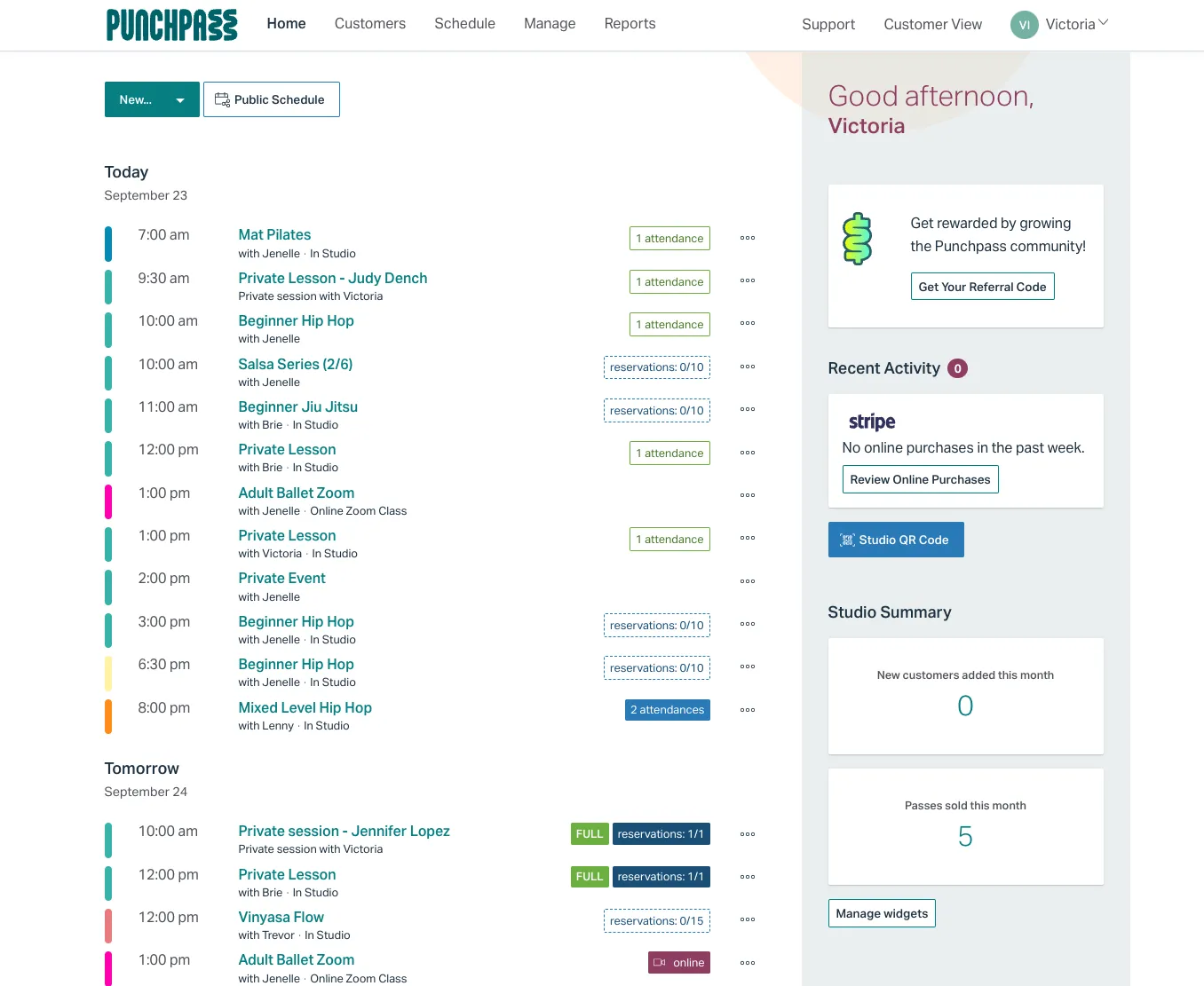
Punchpass focuses on independent yoga, fitness and dance studios. Its monthly plans are US$59, US$99 and US$149, with a 12% discount shown for annual billing and a 14-day trial.
Every plan includes unlimited classes, passes and instructors. Grow includes waitlists, waivers, private sessions, three automations and 10,000 minutes of video storage. Flow adds recurring memberships, family accounts and 20,000 minutes. Pro allows unlimited automations and 30,000 minutes.
Where Punchpass is strong
- Transparent public pricing and month-to-month plans
- Unlimited classes, passes and instructors
- Waitlists, waivers, Zoom classes and recorded content
- Free customer-list migration advertised by Punchpass
What to check
Australian studios pay in USD and Stripe fees are separate. Punchpass has an iPhone app, while Android users can install its progressive web app. Test that experience with clients before moving. See the official Punchpass plans.
6. Momence: best for hybrid classes and built-in communication
Momence supports classes, events, appointments, courses, retreats, on-demand video, newsletters, email, SMS, staff accounts, payroll and multiple locations. It also offers a free client app page and an optional branded app.
Momence advertises free and lower entry tiers, but a full studio setup realistically starts around US$199 per month. Once you add the features many studios need — such as messaging, branded apps, extra staff tools or other add-ons — the monthly bill can easily rise above US$300, before card processing and foreign-exchange costs for Australian buyers. Ask for a written quote that separates the base plan, add-ons, payment processing, SMS and migration.
Where Momence is strong
- In-person, livestream and on-demand services in one product
- Email, SMS, automations and unified messaging
- Courses, retreats, appointments, packs and memberships
- Staff accounts, reporting and payroll tools
What to check
A broad platform can take longer to configure than a simple class system. Price the configuration you would actually run, not the cheapest published tier — add-ons are where Momence often moves from about US$199 into the US$300+ range. Ask for a demo of your passes, cancellation policy, payroll and Australian payment flow. See the official Momence pricing.
7. WellnessLiving: best for marketing and CRM features
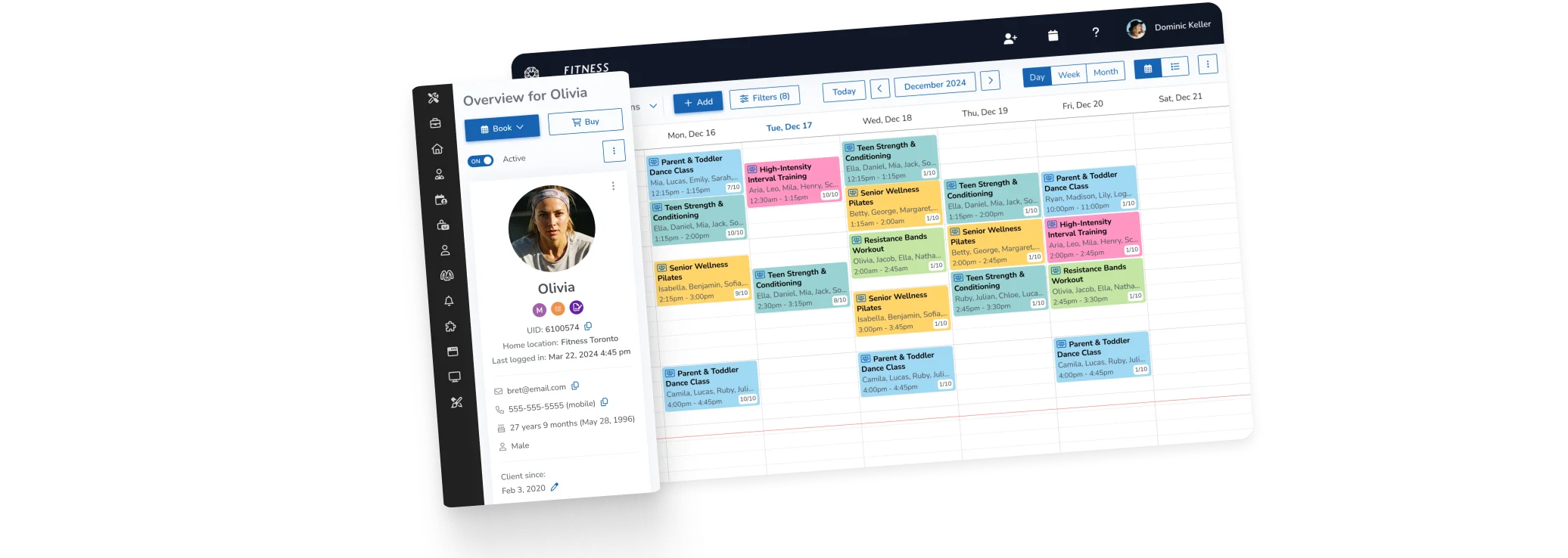
WellnessLiving combines classes, appointments, client apps, point of sale, reminders, marketing, lead management and loyalty tools. The company says more than 7,500 gyms, yoga studios and wellness centres use the platform.
Its official page shows monthly prices of $69 for Starter, $199 for Business and $349 for BusinessPro, with 10% lower prices on annual billing. The page does not clearly label those figures as AUD for Australian buyers, so confirm the currency, tax and regional inclusions in writing.
Where WellnessLiving is strong
- Classes and appointments in one system
- Marketing, lead management, rewards and loyalty
- Free setup and data migration advertised by WellnessLiving
- BusinessPro includes a white-label client app
What to check
Starter includes only one staff member. Several communication and marketing functions are add-ons or pay-per-use. Ask for the normal rate after any introductory discount and confirm contract terms. Review WellnessLiving pricing.
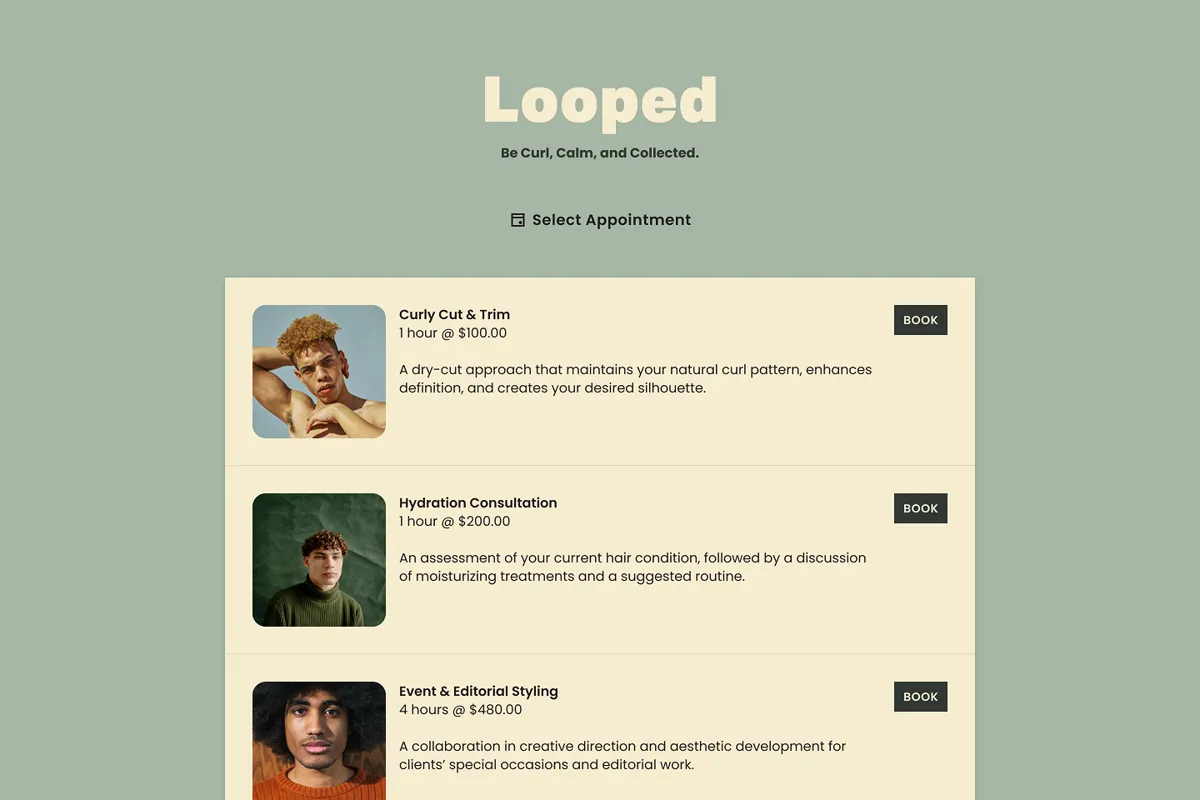
8. Acuity Scheduling: best for private yoga sessions
Acuity is a Squarespace scheduling product built around appointments. It can accept group bookings, but it fits a yoga therapist, private teacher or wellness business better than a studio with a busy class timetable.
Monthly pricing is US$20 for Starter, US$34 for Standard and US$61 for Premium. Annual billing reduces the advertised monthly equivalents to US$16, US$27 and US$49. Plans include 1, 6 and 36 calendars, with a 7-day trial.
Where Acuity is strong
- Stripe, Square and PayPal integrations
- Client forms, time-zone conversion and email reminders
- Packages, memberships, gift certificates and SMS on Standard and above
What to check
Test waitlists, attendance, class-pass rules and check-in carefully. These are not Acuity's main purpose. Prices are in USD and tax is extra. For a wider appointment comparison, read the guide to appointment scheduling software in Australia, or check the official Acuity plans.
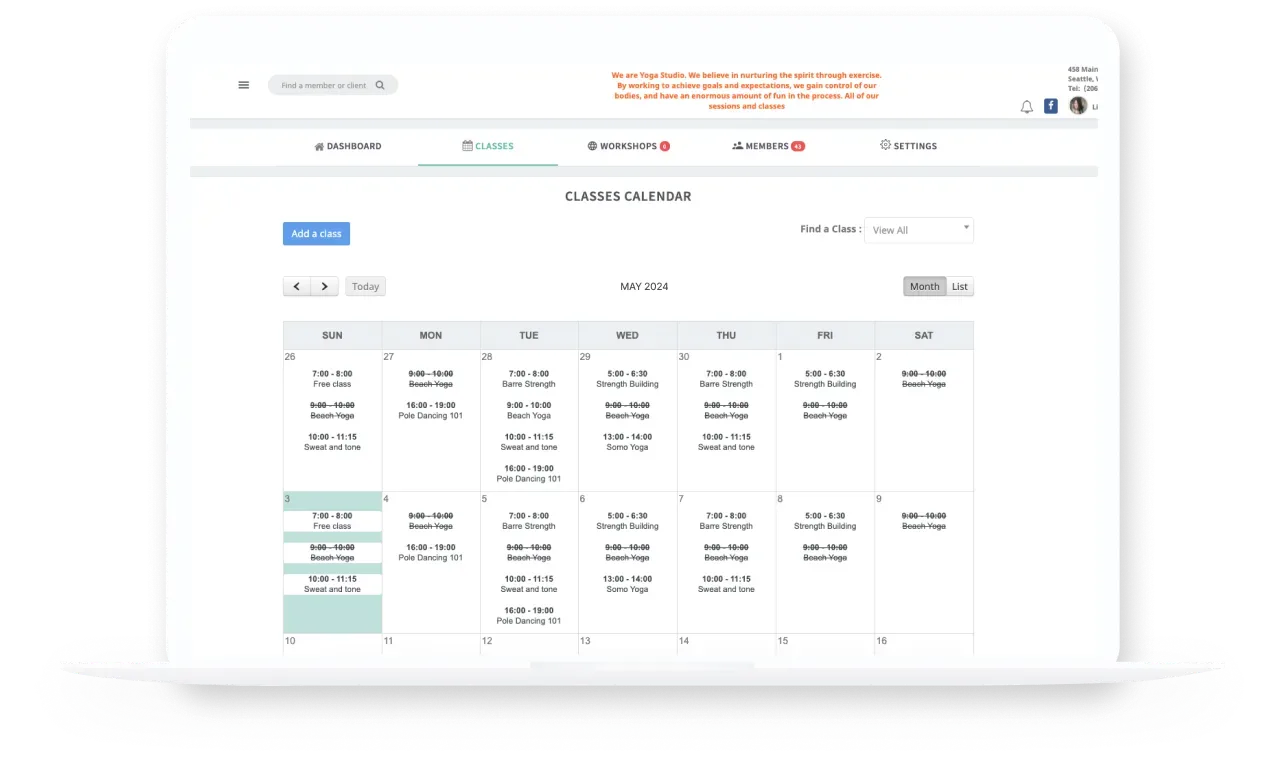
9. StudioBookings: best low-cost class platform
StudioBookings is made for fitness and wellness classes. Its public pricing starts at $25 per month for a solo owner, and it advertises a 14-day trial with no payment required. The official page does not clearly label the currency for Australian readers.
Every plan includes waitlists, waivers, class-pass purchases, staff and client logins, iOS and Android apps, SMS, revenue reports and attendance reports. StudioBookings says 1,500+ new studios joined in the previous year.
Where StudioBookings is strong
- Low advertised starting price
- All listed features included on every plan
- Client and staff apps for iOS and Android
- No long-term contract advertised
What to check
Confirm the billing currency, GST treatment, payment processor and Australian support hours. A low subscription only helps if the reporting, migration and support fit your studio. See the official StudioBookings pricing.
10. Clovo: best for Australian studios that want no monthly fee
Clovo is boutique fitness studio software built for Australia. It targets yoga, Pilates and group fitness businesses with branded booking apps, class capacity, memberships, credit packs, waitlists, Stripe payments, kiosk check-in and Australian support.
There is no monthly subscription. Clovo charges 1% of payments collected through the platform, capped at A$1,100 + GST a year, plus Stripe’s card fees. Setup is free and no credit card is required to start. Pricing, payouts and reporting are in AUD, and Clovo says infrastructure is hosted in Sydney.
Where Clovo is strong
- No monthly fee; you pay only when you take sales through Clovo
- Yearly platform-fee cap at A$1,100 + GST
- AUD billing, Australian support and Sydney-hosted infrastructure
- Branded client apps, memberships, packs, waitlists and Stripe payouts
What to check
Model the 1% fee against your monthly online sales, then compare it with a fixed Australian subscription. Confirm GST reporting, direct-debit options, class-pass rules and how migration works if you leave. See the official Clovo pricing.
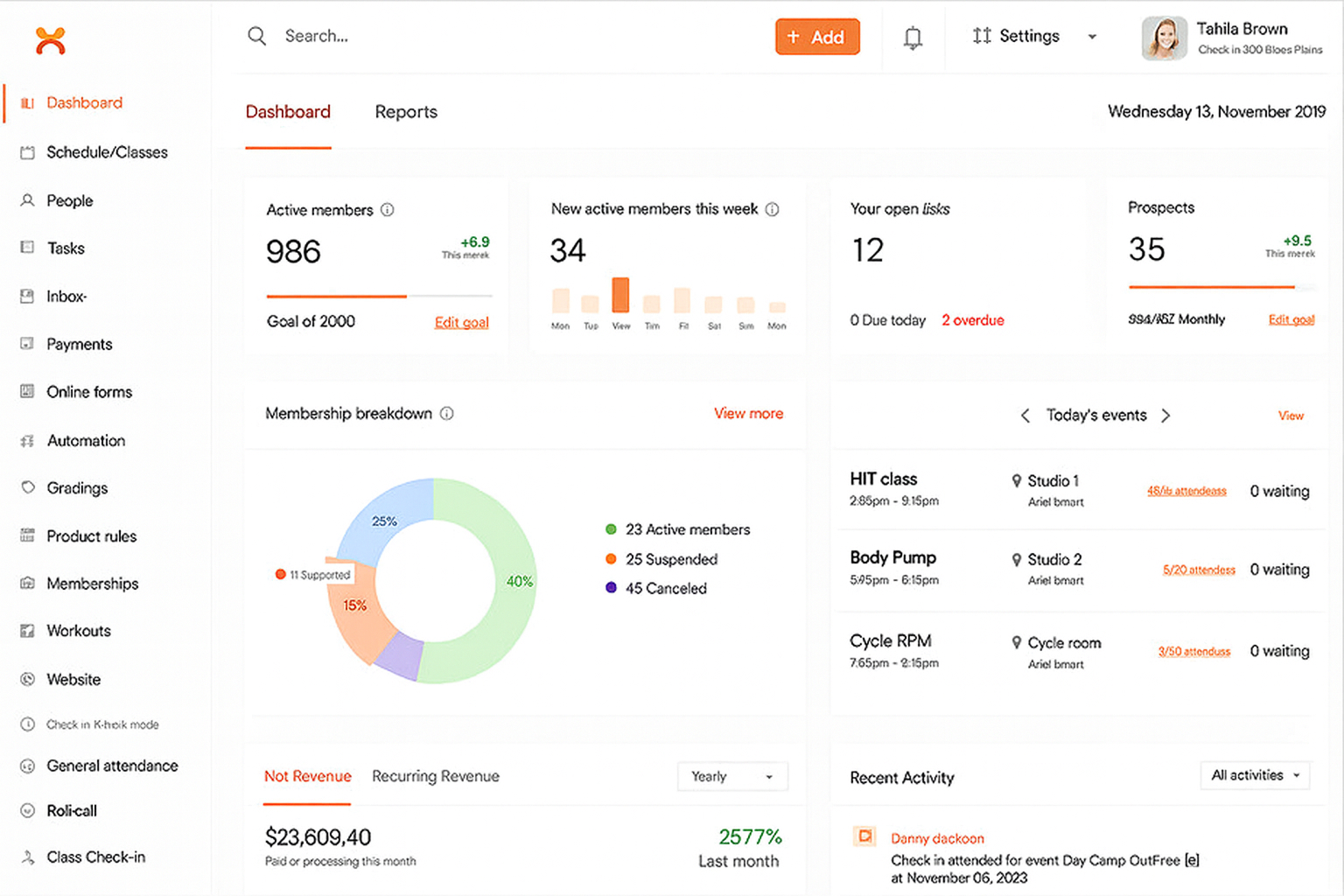
11. Clubworx: best Australian option for membership-heavy studios
Clubworx is Australian fitness management software used by yoga, Pilates, martial arts, dance and boutique gym businesses. It covers member accounts, class scheduling, bookings, billing, communications, forms, waivers and reporting in one place.
Public pricing is in AUD: a free plan for up to 20 active members, then A$109, A$149 and A$169 per month as member counts grow. Clubworx advertises a 15-day premium trial with no credit card. Optional member apps cost extra, including a basic app around A$100 per month or a custom branded app from about A$200 per month plus setup.
Where Clubworx is strong
- Clear AUD plans from free entry through unlimited members
- Membership billing, scheduling, forms, waivers and automation in one product
- Useful when retention, prospects and recurring payments matter as much as bookings
- Built for fitness businesses rather than generic appointment calendars
What to check
Add app fees to the subscription before comparing totals. Test yoga-specific class packs, waitlists, late cancellations and teacher workflows during the trial. Ask about Australian support hours and export options. See the official Clubworx pricing.
Which platform fits your Australian studio?
- New independent teacher: Test CoreBookings and Bookamat. If most work is private, include Acuity.
- Suburban yoga studio: CoreBookings offers Australian support and class-based tools without enterprise complexity.
- No monthly software fee: Clovo is worth modelling if you prefer a capped percentage of sales over a fixed subscription.
- Membership-heavy studio or boutique gym: Clubworx is a strong Australian shortlist option alongside CoreBookings.
- Large or multi-location studio: Compare Mindbody, WellnessLiving and Momence using the same written requirements.
- Studio with a large video library: Punchpass publishes clear video allowances, while Momence also promotes unlimited on-demand storage.
- Tour or retreat operator: Nabooki may fit ticketed activities, but test memberships and repeat studio classes before choosing it.
- Very price-sensitive studio: Bookamat, StudioBookings and Clovo have low entry points, but calculate payment fees and foreign-currency costs.
If you are still setting up the business itself, read the guide for new yoga studios. Software cannot fix an unclear timetable, pricing model or cancellation policy.
A simple 7-day software test
Use the same test in two products. Do not spend the trial only changing colours and uploading a logo.
- Create one drop-in, one 10-class pass and one recurring membership.
- Publish a class with 10 places and join the waitlist as the 11th client.
- Buy a pass and book from a phone without using the admin login.
- Cancel inside and outside your cancellation window.
- Record one no-show and one unpaid visit.
- Ask another teacher to mark attendance and run a class report.
- Export clients, sales, attendance and remaining passes.
Time each task and contact support once. A system that takes 5 minutes for a common desk task will still take about 5 minutes when ten clients arrive together.
Frequently asked questions
How much does yoga studio software cost in Australia?
The platforms in this guide start from free to about A$169 per month for Australian-priced plans, or from US$20 upward where overseas pricing applies. Mindbody advertises from A$89 per location, but Core and Growth are A$279–A$369, and studio owners online often report much higher all-in costs once branded apps, processing and marketplace commissions are included. Momence is similarly pricey for a full studio setup at about US$199, with add-ons often pushing totals over US$300. The subscription is only one cost. Allow for GST, card processing, SMS, apps, add-ons, foreign exchange and migration.
Is Australian support worth paying for?
Local support is valuable when your busiest classes run outside US or European business hours. Test support during the trial by asking a real setup or payment question and recording how long the useful answer takes.
Does yoga studio software include GST?
It depends on the supplier and the advertised price. CoreBookings lists prices plus GST, while overseas suppliers may bill in another currency and handle Australian tax differently. Check the invoice details and ask your accountant how the expense should be treated.
Does my yoga studio data need to be stored in Australia?
Not every Australian studio needs local data hosting, but you should know where data is stored, which providers can access it and how client information is exported or deleted. Read the privacy policy and assess your obligations under Australian privacy law.
Can I move clients and passes from my current booking system?
Most providers can import client records, but open passes, memberships, payment tokens and historical attendance are harder. Ask for a written migration scope and test an export before cancelling your existing service.
Do I need a branded mobile app?
A branded app can help a large studio, but it is not essential for every teacher. A fast client app or mobile booking page is usually enough if clients can buy a pass, book, cancel and see their schedule without confusion.
My recommendation
For most independent Australian yoga studios, I would start with CoreBookings. The A$59 starting price is clear, the product understands classes, passes, memberships, courses and workshops, and local support removes a common time-zone problem.
Bookamat is the strongest alternative for a very small or growing studio that likes active-client pricing. Clovo is the clearest no-monthly-fee Australian option if the 1% sales fee still beats a fixed subscription at your volume. Clubworx belongs on the shortlist for membership-heavy studios that want AUD plans and broader gym-style retention tools. Mindbody deserves a place when marketplace reach and scale matter more than keeping the system simple — only after you model the full per-location cost, add-ons and marketplace fees that studio owners often complain about online. Acuity is the better fit when private appointments are the business.
Take two trials and run the same seven-day test in both. Compare the full yearly cost and insist on a written migration plan. To test CoreBookings with your own timetable, start a free trial, review the plans, or book a demo.